 &
&


Intermittent Fasting: The Gentle Reset Your Body Has Been Waiting For

**Disclaimer: some of the products I mention in this post are affiliate links, but I 100% use them every day and can truly vouch for their quality
If there’s one thing I’ve learned about wellbeing, it’s this: sometimes it’s not about adding more, but about giving your body a break.
We’re used to thinking about what to eat, what supplements to take, what routines to add. But giving your body time without food? That’s where the magic happens. I only truly understood this after a little family story…
How It All Started

This summer, my husband went to visit his family in Spain. Whilst there, he reconnected with his old school friend, now a doctor. He and his wife are both approaching 50, and my husband couldn’t get over how healthy and vibrant they looked. When he asked their secret, the answer was simple: intermittent fasting.
His wife does it every single day (unless there’s a special event). The Doctor does it a few times a week.
They both use the 16/8 method where you eat within an 8-hour window and fast for 16.
The doctor explained how it gives the body time and space to repair, clear out damaged cells, and reset itself. It’s not about eating less. It’s about letting the body switch from constant digestion into restoration mode.
16/8
My husband came home with so much enthusiasm for intermittent fasting that it started to rub off on me. I’d actually tried it in the past so was aware of the benefits, but sometimes when someone shares their excitement at the right moment, it just feels easier to follow along.
So we started right away.
Since August, I’ve been using the 16/8 method with early fasting daily. I finish my last meal at 4 pm and start again the next morning at 8 am.
And honestly, I feel so, so good.
What Is Intermittent Fasting?
Intermittent fasting is not a diet — it’s a rhythm of eating.
Instead of focusing on what you eat, it focuses on when you eat. The idea is simple: you eat during a set window of time and fast during the rest.
There are different ways to do it, which makes it easy to adapt to your lifestyle:
-

16/8 method - the most popular: 16 hours of fasting, 8 hours of eating (for example, first meal at noon, last meal at 8 pm).
-
14/10 method - a gentler version, with a 10-hour eating window.
-
OMAD (One Meal a Day) - a shorter eating window, where all calories are consumed in a single meal.
-
5:2 method - eat normally five days a week, and on two days, reduce calories to around 500–600.
-
Early fasting - finishing meals earlier in the day (like I do, with my last meal at 4 pm). This supports natural circadian rhythms and can be particularly powerful for sleep and hormonal balance.

There isn’t one “right” way. The best method is the one that feels sustainable and supportive for your body.
Why Intermittent Fasting Works
When you give your body a fasting window, a few fascinating things happen:

Blood sugar balances better. No late-night snacking means fewer sugar spikes and dips, which steadies energy and mood.

Cell repair switches on. During fasting, the body triggers autophagy — a natural “clean-up” process where old or damaged cells are broken down and recycled.

Digestion takes a rest. Instead of working all night to process food, your system can focus on healing and restoring.

Hormones align. Growth hormone increases, which supports metabolism, fat burning, and even collagen repair for the skin.
It almost feels like fasting is the reset button we didn’t know we needed.
How I Implement Intermittent Fasting
For me, intermittent fasting is about rhythm, not restriction. I follow the 16/8 method with early fasting.
This means I finish eating at 4 pm and begin again the next morning at 8 am. Here’s what that looks like in practice:


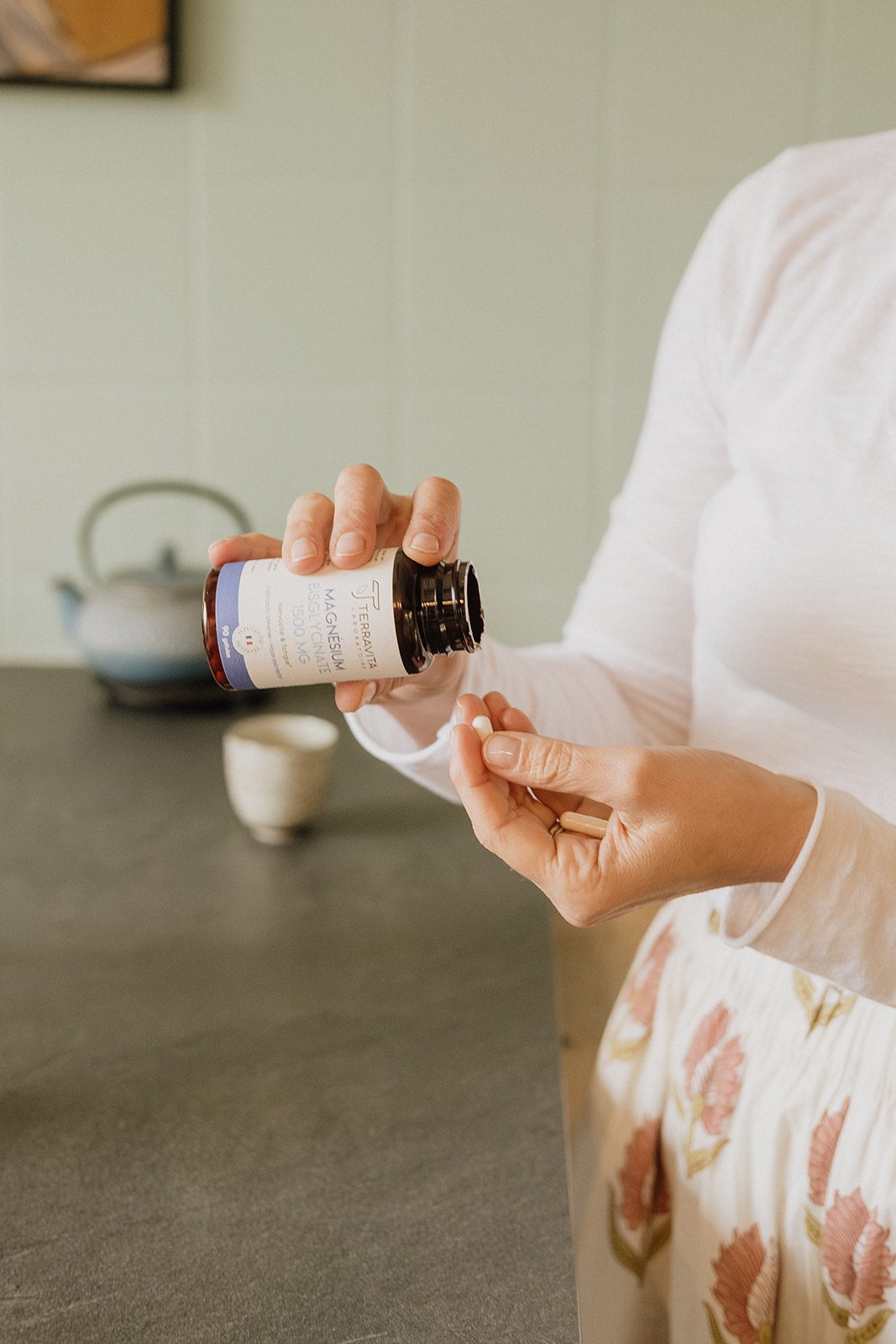
This little ritual of greens and magnesium has become my signal that the day is complete. It feels like giving my body a gentle reset before sleep.

I break my fast with a nourishing meal around 8 am. I focus on protein, healthy fats, and colourful vegetables or fruit to give my body what it needs after the overnight reset. I’ve found that keeping breakfast balanced (not sugary) makes energy last much longer through the day.

My eating window is between 8 am and 4 pm. During this time, I make sure I get everything my body needs — proteins, fibre, healthy fats, and plenty of minerals and vitamins. Intermittent fasting works best when the body is well nourished, so I treat the eating window as my chance to give myself exactly that.

Since I stop eating at 4 pm, evenings have become much calmer. There’s no heavy dinner to digest, no late snacking, no feeling sluggish before bed. Instead, I focus on hydration, rituals, and sleep. Me or my husband cook for our children — he also fasts, but his rhythm is different. His last meal is usually around 8 pm, while mine is earlier in the day.

I always keep a little ritual: a glass of filtered water mixed with Active Cell Cleanse Super Greens and my magnesium supplement.
Over time, I noticed that adding the greens in the evening gave me a lighter, clearer feeling the next morning, almost as if my body had done a better job of tidying up overnight. Because I fast, my digestion is already resting, so I feel the nutrients have more space to do their work. It’s become a simple part of my routine that really supports the way fasting makes me feel.
Alongside this, I take magnesium.. Magnesium is a mineral most people are low in, and it plays a key role in calming the nervous system, relaxing the muscles, and supporting deep sleep. The important thing when choosing a magnesium supplement is absorption; not all forms are equal. Look for magnesium bisglycinate, citrate, or malate, which the body can take in more effectively. The one I use is from Cytoplan.
This little ritual of greens and magnesium has become my signal that the day is complete. It feels like giving my body a gentle reset before sleep.
Tips If You’re Curious to Try
Start gradually
If 16/8 feels too much, begin with 12/12 (finish dinner at 7 pm and eat again at 7 am). Slowly stretch the fasting window.
Stay hydrated
Water, herbal teas, and mineral-rich drinks like Super Greens make fasting much easier.
Make it flexible
It’s not about perfection. If you have a dinner out or a special event, enjoy it. The body benefits from consistency, not rigidity.
Listen to your body
If you feel dizzy, weak, or overly restricted, adjust the window. Fasting should feel nourishing, not punishing.
Things to Keep in Mind
Intermittent fasting can be a wonderful tool, but it’s important to approach it with care. The eating window is when your body needs to receive all the nutrients it will use to function, repair, and restore. Make sure your meals include a balance of protein, healthy fats, fibre, and plenty of colourful fruits and vegetables. This way, fasting feels supportive rather than depleting.
If you have any medical conditions, are pregnant, or are breastfeeding, it’s always best to check with a health professional before starting. And remember: fasting is not about restriction, it’s about rhythm. The goal is to nourish the body fully during your eating window and give it space to rest in between.
Why It Matters
For years we’ve been told that health is about adding more: more supplements, more routines, more products. But sometimes, what our body craves most is simply space.
Intermittent fasting is not a trend, it’s an ancient practice. From religious traditions to natural cycles, humans have always had periods of feast and pause. In today’s world of constant eating, giving your body a break might just be the missing piece.
- Choosing a selection results in a full page refresh.
- Opens in a new window.