Hero Image

Supplements: Filling the Gaps Our Bodies Cannot Always Cover

By Sakina Di Pace,

By Sakina Di Pace,

Acupuncturist and founder of Sérénité

Still, there are some nutrients that almost all women over 35 are low in, simply because our bodies struggle to make or absorb enough of them.

These are the big four:

  • Vitamin D
  • Magnesium
  • Omega-3
  • Zinc

And here’s what recent research shows about how commonplace these deficiencies are:

(The research was performed in the UK but is reflective of most Western societies)

As you can see, the official numbers in blue already look high, but when we use optimal ranges, the ones micronutritionists recommend for real vitality, the gaps are even more striking.

In this article, I’ll go through each one in detail and share how I personally approach them in my daily life. But first, let’s talk about being tested.

Why Testing Is So Valuable

Don’t wait until you feel unwell to start looking into your health.

I believe everyone, even if you feel fine, should do a full micronutrition check-up at least once in their life. It’s like lifting the curtain and seeing what’s really going on inside your metabolism.

Our lifestyle today is rarely perfect. Stress, lack of sleep, processed food, environmental toxins, and even soil depletion all affect the way our bodies absorb and use nutrients. Some people metabolise certain vitamins less efficiently, others burn through minerals faster. You can’t always guess this from the outside.

That’s why testing can be so powerful. What can be measured, can be managed.

A micronutritionist or naturopath will look at things like:

  • Hormone balance
  • Vitamin and mineral levels
  • Inflammation markers
  • Gut health and microbiome
  • How your metabolism is functioning day to day

The results can be a real eye-opener. Instead of guessing which supplements you might need, you get clarity on the ones you specifically need. It’s like switching from a one-size-fits-all jumper to something tailored exactly for your shape.

Moreover, it’s also a way to prevent disease before it develops, and to support your body in living an optimal, healthy life.

In August 2025, I decided to go a step further and explore my own DNA blueprint (or genomic blueprint). I’ve known Stephanie, Functional Wellness Coach, for years. She was actually the one who encouraged me to open my business back in 2020, so it felt natural to work with her. I did a simple cheek swab at home and sent it off for functional DNA analysis. About six weeks later, we went through my results together.

It was fascinating to see how many things made sense once I saw my genetics. My results showed that, at the gene level, I have a strong thyroid and resilient gut, but also a tendency toward inflammation, slower methylation, and a need for consistent Vitamin D, magnesium, zinc, and antioxidant support. It helped me fine-tune my supplements, nutrition, and stress routines in a way that finally felt personal and precise.

No more guessing.

If you look at my Superfood section, you’ll see that most of the superfoods I take are aligned with my genomic blueprint or DNA results.

Working with Stephanie also reminded me of something very important. Don’t wait to be sick to start getting tested. Prevention is so much better than healing.

If you want to explore your own DNA blueprint, you can work with Stephanie too. She offers Functional Genomics Testing and Epigenetic Coaching to help you understand how your genes affect your metabolism, sleep, hormones, and stress resilience.

You can visit her website here, and if you tell her I sent you, she'll offer you 10% off.

Vitamin D: The Sunshine Deficit

A friend of mine who is also a micronutritionist told me something that stayed with me. She has never seen someone with optimal Vitamin D levels who was not supplementing.

Around 50 percent of UK adults have Vitamin D levels below what is officially recommended. In the United States, it is almost 9 in 10 people. These numbers are already high, but they are based on the lowest bar: public health guidelines designed only to prevent rickets and bone disease. Micronutritionists look for much higher, optimal levels that support immunity, hormones, mood, and skin. By those standards, almost everyone is lacking Vitamin D without supplementation.

image

O or two centuries ago it was very different. People spent more time outdoors, worked using natural daylight, and did not wear sunscreen. Today, most of us live and work indoors, travel in cars, cover ourselves with clothing, and protect our skin when we are outside. Even in summer, it’s rare to get enough exposure to produce the Vitamin D we need.

Vitamin D3, also called cholecalciferol, is the form our bodies make from sunlight and the one best absorbed when we take it as a supplement. It strengthens bones, supports immunity, regulates mood, and helps the skin repair itself.

Personally, I take a liquid Vitamin D3 supplement here in France, two drops a day in a little spoon. Wherever you live, you should be able to find a reliable version in most health shops or pharmacies.

How to Take Vitamin D3

The maintenance dose is about 60 IU per kilogram of body weight per day. For someone weighing around 50 kilograms, that means about 3 000 IU per day, or roughly three drops of a standard D3 supplement.

  • Take it with a meal that contains some healthy fat such as olive oil, avocado, or nuts
  • Drops and capsules are equally effective, choose whichever you find easiest to take consistently
  • Take it daily, especially from autumn to spring when sunlight is weaker
  • Test your levels once or twice a year if possible to adjust your dose

Omega-3: Nourishing Skin, Hormones, and the Brain

Omega-3 fatty acids are essential for life. They calm inflammation, support hormone balance, keep skin elastic, and protect brain function.

The problem is that most modern diets don’t provide enough. Traditional diets included more wild fish, seeds, and nuts. Today we eat fewer oily fish, rely more on processed foods, and farming practices have shifted the balance toward Omega-6 fats, which compete with Omega-3 in the body.

Low Omega-3 shows up as dry skin, stiff joints, mood changes, or increased inflammation. For women in perimenopause or menopause, Omega-3 is especially supportive for skin hydration, hormone regulation, and heart health.

Personally, I like to prepare a simple oil blend at home.

In a half bottle of olive oil, I add one quarter rapeseed oil and one quarter linseed oil. I keep it in the fridge and pour one or two spoonfuls over my meals every day. It is an easy way to bring Omega-3 into my daily life. I also try to eat sardines or mackerel at least twice a week.

How to Take Omega-3

  • Eat oily fish such as sardines, mackerel, or anchovies two times per week if possible
  • If you supplement, look for Omega-3 with both EPA and DHA
  • Capsules or liquid oils are equally fine
  • Keep plant oils in the fridge to protect their delicate fatty acids

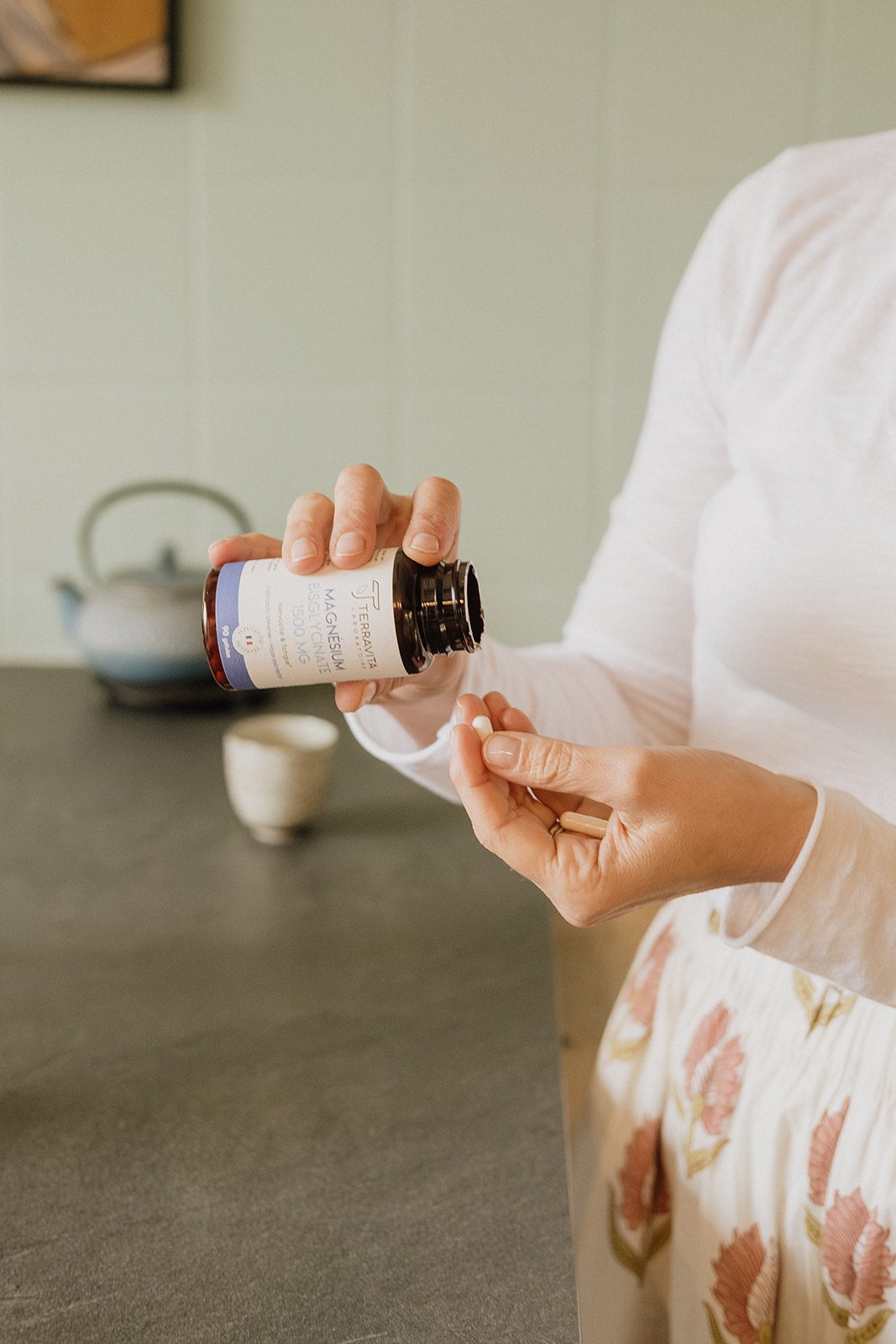
Magnesium: The Calm Mineral

Magnesium is often called the relaxation mineral, and for good reason. It supports sleep, calms the nervous system, helps muscles release tension, and assists in skin repair. For women over 35, it’s also important for balancing hormones and supporting bone health.

More than 80 percent of UK women don’t get enough magnesium from food. Modern farming has left soils depleted, so fruits and vegetables contain less magnesium than they did a century ago. Stress, coffee, and alcohol also deplete our levels, while processed foods contain almost none.

Shops are full of products with beautiful packaging, but not all magnesium is the same. Many contain forms that are poorly absorbed, which means they deliver very little of what you actually need. This’s why it’s important to read the back of the bottle rather than just trusting the front label.

The form I recommend is magnesium bisglycinate because it’s gentle on digestion and very well absorbed. Personally, I take the one from Happy Mammoth called Magnesium Breakthrough.

I like it because it combines several forms of magnesium and I genuinely notice the difference in my sleep and calmness. You can also find good options in pharmacies or with the advice of a nutritionist. Just remember:

Not all magnesium is created equal even if the labels make it look that way.

How to Take Magnesium

  • Magnesium bisglycinate is the most effective and gentle form
  • Take it in the evening to support deep rest and relaxation
  • Split larger doses to avoid digestive discomfort
  • Check the back of the bottle before buying to make sure you are getting the right type

Zinc: Small but Mighty

Zinc is often overlooked, yet it’s essential for strong immunity, hormone balance, and glowing skin. It supports collagen production, speeds up healing, and strengthens hair and nails.

Many women fall short because modern soils contain less zinc than before and plant foods often contain compounds that block absorption. Those who eat little meat or shellfish are especially at risk. Stress, infections, and hormonal changes also increase the body’s need for zinc.

Even mild shortages can make a difference. Breakouts, brittle nails, thinning hair, or wounds that heal slowly are all signs you may not have enough zinc.

Personally, I keep zinc in my supplement routine, especially during winter or times of stress when my immune system needs extra support.

How to Take Zinc

  • Take zinc with food to avoid nausea
  • Do not combine it at the same time as iron or calcium as they compete for absorption
  • Look for zinc picolinate or gluconate, which are better absorbed
  • Look for zinc picolinate or gluconate, which are better absorbed