Sleep: The Secret Ingredient to Feeling (and Looking) Your Best
By Sakina Di Pace, Acupuncturist and founder of Sérénité
**Disclaimer: some of the products I mention in this post are affiliate links, but I 100% use them every day and can truly vouch for their quality
If there’s one thing I’ve learned about health, beauty, and wellbeing, it’s that sleep is the hidden key. You can drink all the green juices, buy the expensive creams, and even exercise daily, but if you’re not sleeping well, your body and mind can never run optimally..
Sleep is when your skin repairs itself, your brain clears out toxins, your immune system resets, and your hormones balance. It’s not just rest. It’s a full-body tune-up.
I only really understood this after reading Why We Sleep by Matthew Walker (you can find the book here). It’s a book that should be studied as part of the national curriculum.
He shares eye-opening facts:
After just one night of four or five hours of sleep, your body’s natural killer cells (the ones that fight cancer) drop by as much as 70%.
Even mild sleep deprivation increases the risk of catching a cold, affects how your brain processes memories, and accelerates ageing.
When you sleep deeply, your skin hydrates itself better, your emotions settle, and your brain strengthens what you learned during the day.
Once you know what’s at stake, you can’t un-know it.
Since then, I’ve been on a mission to figure out what actually makes sleep better. Here’s what I’ve found works for me and my family…
The Long-Term Difference: Sleeping Well vs Sleeping Badly
Here’s what happens if you consistently get 8+ hours of good sleep compared to living on less than 6 hours for years:
8+ Hours of Sleep
Under 6 Hours of Sleep (repeatedly)
Skin
Skin repairs overnight, collagen is produced, hydration improves, and fine lines soften.
Faster skin ageing, duller complexion, increased wrinkles and dark circles.
Brain
Stronger memory and learning, better focus, creativity, and emotional balance.
Poor focus, memory lapses, mood swings, anxiety, and higher risk of dementia later in life.
Immune System
Natural killer cells are active, stronger resistance to colds, flu, and even cancer defence.
Natural killer cells drop by up to 70%, making you more vulnerable to illness and infections.
Hormones
Balanced appetite hormones, better metabolism, and more stable moods.
Increased ghrelin (hunger hormone), higher cravings, weight gain, and hormonal imbalances.
Energy
Steady energy, motivation to move, and emotional resilience.
Chronic fatigue, irritability, and higher risk of burnout.
Longevity
Linked to longer lifespan and healthier ageing.
Linked to shorter lifespan and faster biological ageing.
1. Put the Screens to Bed Before You Go
No phones in the bedroom. It really is one of the biggest hacks for better sleep.
Screens give off blue light, which tricks the brain into thinking it’s still daytime. That means your body produces less melatonin, the sleep hormone, so it takes longer to fall asleep and the sleep you do get is lighter. Add to that the constant pings, news, and scrolling, and no wonder our minds can’t switch off.
In our home, we’ve made it non-negotiable. We set up a Charging Station for Multiple Deviceslike this one in my husband’s office. Every evening, all the phones and tablets go there, not in the bedroom. We even set the WiFi to switch off automatically at 11 pm. No internet, no temptation. It’s honestly the best trick I’ve found for creating calm evenings.
Once the internet is gone, it feels like a natural signal for my body to wind down.
And if you really must use a device in the evening, I use a blue light filter from Ocushield(you can see it here). It’s a medical-grade screen protector that blocks the harshest blue light. I actually have Ocushield filters set up on all my devices, and I use them day and night. Of course, nothing beats putting the phone away completely, but if you’re working late or watching something, it’s a helpful backup.
2. Invest in Your Bed
A wise person once told me: “don’t be afraid to invest big money in things you use every day”.
You spend around 8 hours every night on your mattress. That’s a third of your life! So the quality of your bed matters more than most people realise.
Sleeping on the wrong mattress can do more harm than we often admit. By “wrong” I mean one that’s too old and saggy, made with cheap or toxic materials, or simply not supportive enough for your body. A mattress like this doesn’t just make you uncomfortable. Over time, it can:
Put strain on your spine and joints, leading to back, neck, or shoulder pain.
Prevent you from reaching deep sleep stages because you keep tossing and turning to get comfortable.
Trigger allergies or breathing issues if the mattress is full of dust mites, mould, or chemicals.
Leave you waking up groggy and unrefreshed, even after what should have been a full night of sleep.
Signs your mattress might be wrong for you:
You wake up stiff, sore, or with back or neck pain.
You sleep better in a hotel bed or even on the sofa.
Your mattress has visible sagging, lumps, or dents.
You often wake up feeling hot and sweaty.
Your allergies or breathing issues flare up more at night.
You need to constantly adjust your position to get comfortable.
HOW TO CHOOSE YOUR MATTRESS
If you’re thinking of changing your mattress, it’s worth taking a little time to find the right one. A mattress isn’t something you replace every year, so it pays to get it right.
Support: Your mattress should keep your spine in a neutral position. Too soft or too firm, and your body will be out of alignment.
Motion isolation: If you share a bed, a mattress that minimises movement transfer will help you sleep more peacefully.
Materials: Look for natural or certified non-toxic materials such as organic cotton, wool, or natural latex. These are healthier and usually last longer.
Durability: A good mattress should last around 7–10 years. If yours is much older, it’s time to think about a replacement.
Temperature regulation: If you’re a hot sleeper, choose a mattress with breathable fabrics and cooling properties.
And one simple tip: rather than only browsing online, it’s often worth going into a shop to test the mattress in person. Lie on it, see how it feels, and notice whether your body feels supported. You spend a third of your life in bed, so a few minutes trying it out is time well spent.
My experience
For years, we slept on the same IKEA mattress. Honestly, we didn’t think much about it… until we moved to France. After more than 10 years on the same mattress, we finally decided it was time to invest in a proper one.
We spend a third of our life in bed. Eight hours every single day. If there’s one place where it makes sense to invest in comfort and health, it’s the thing we lie on for almost half our existence. So we went to a lovely shop near our new home that sells breathable, non-toxic mattresses made in France.
We took our time, tried different levels of firmness, talked through what each of us needed, and chose the one that felt best for both of us. And honestly, the difference was immediate. Just changing to a good quality mattress already made our nights so much deeper and calmer.
Later on, I also invested in a smart temperature-regulating cover that fits around our mattress and adjusts to your body temperature during the night. I love it. It keeps me cool, comforts my nervous system, and helps me fall asleep and stay asleep more easily. For me, it really completed the feeling of having a “sleep sanctuary”.
Other simple upgrades
There are other simple and effective ways to make your bed safer and healthier:
Choose a non-toxic mattress when you can. Excellent high-quality options include the Avocado Green Mattress and the Birch Luxe Natural, both organic, eco-certified, and breathable.
Use a protective cover against bacteria, dust mites and allergens, and don’t forget to change or wash it once a week.
Keep your bedsheets clean and breathable, washing them weekly. Eco-friendly options like organic cotton or bamboo percale are wonderful.
A non-negotiable: use a silk pillowcase like this one. It’s not just a luxury. Silk helps the skin glide instead of creasing against the pillow, which means fewer sleep lines that can eventually turn into wrinkles. It also helps your skin and hair retain moisture, reducing frizz and breakage. Silk is naturally hypoallergenic too, making it gentler on sensitive skin.
Your bed should feel like a healthy, safe space for your body to fully recharge.
3. Create a Ritual (and Stick to It)
Rituals matter. You’ve probably heard this advice a hundred times, but putting it into practice really does make a difference. And the easiest way to start is to switch the internet off. Once the WiFi is gone, it’s so much easier to swap screens for calmer rituals.
Here’s what my evenings usually look like. Once the kids have had their story and turned off the light, I jump into my infrared sauna, which is on the bedroom floor. It reassures them to know I’m close by while they drift to sleep. After the sauna, I always take a shower.
Around three evenings a week, I do facial cupping. I love my 6-step protocol in the evening (my starter kit is here). It’s not only great for the skin, but it also feels incredibly calming, like telling my nervous system it’s safe to rest.
Then I slip into my super comfortable bed, and read. Some nights it’s something light and fun, other nights it’s more ‘self-development’-type books like Why We Sleep. At the moment, I’m reading a book about Buddhism. Anything is better than scrolling, and my phone is already tucked away in the charging station.
Repeating little rituals like this trains your brain to associate them with bedtime, so over time, sleep comes more easily.
I’ve also always kept rituals for the kids since they were small, and bedtime has never been an issue in our family. Of course, we did have challenges — for years they didn’t want to fall asleep without us because we co-slept until they were six. But they never resisted going to sleep. It was always bath, then story, then a little chit chat and “dodo” as we say in French. A warm bath really does help them relax and drift off.
In the same way children thrive on rituals, we as adults also feel more settled when our evenings follow a familiar rhythm.
4. A Mini Meditation
Once I’ve turned off the light after reading, I like to focus on just ten breaths. Inhale, exhale, count to ten. It sounds so simple, but it works like a mini meditation. Those few mindful breaths stop my mind from running through tomorrow’s to-do list and gently guide me into sleep.
5. Don’t Go to Bed on a Full Stomach
At the moment, I’m practising intermittent fasting (I explain more in my intermittent fasting section), so I usually stop eating at 4 pm. But even if fasting isn’t your thing, finishing dinner at least 2 hours before bed really helps.
When you go to bed on a heavy stomach, your body is still working hard to digest instead of focusing on rest and repair. Going to bed a little lighter gives your system the space to prioritise deep, restorative sleep.
6. Staying Hydrated All Day for Better Sleep
If you don’t drink enough during the day, your sleep will suffer. Dehydration makes it harder for your body to regulate temperature at night, which can stop you from reaching deep, restorative sleep. It can also leave you waking more often, feeling less rested in the morning, and even slow down the way your skin repairs itself overnight.
I fill up my 500 ml bottle at least three times a day, and I keep it with me from morning until night. For me, this is the easiest way to make sure I’m getting enough water without having to think about it.
The trick is to sip steadily throughout the day, not to chug large amounts right before bed. That way, your body gets the hydration it needs without waking you in the night. I share much more about the importance of hydration for both health and beauty in this article.
7. Magnesium
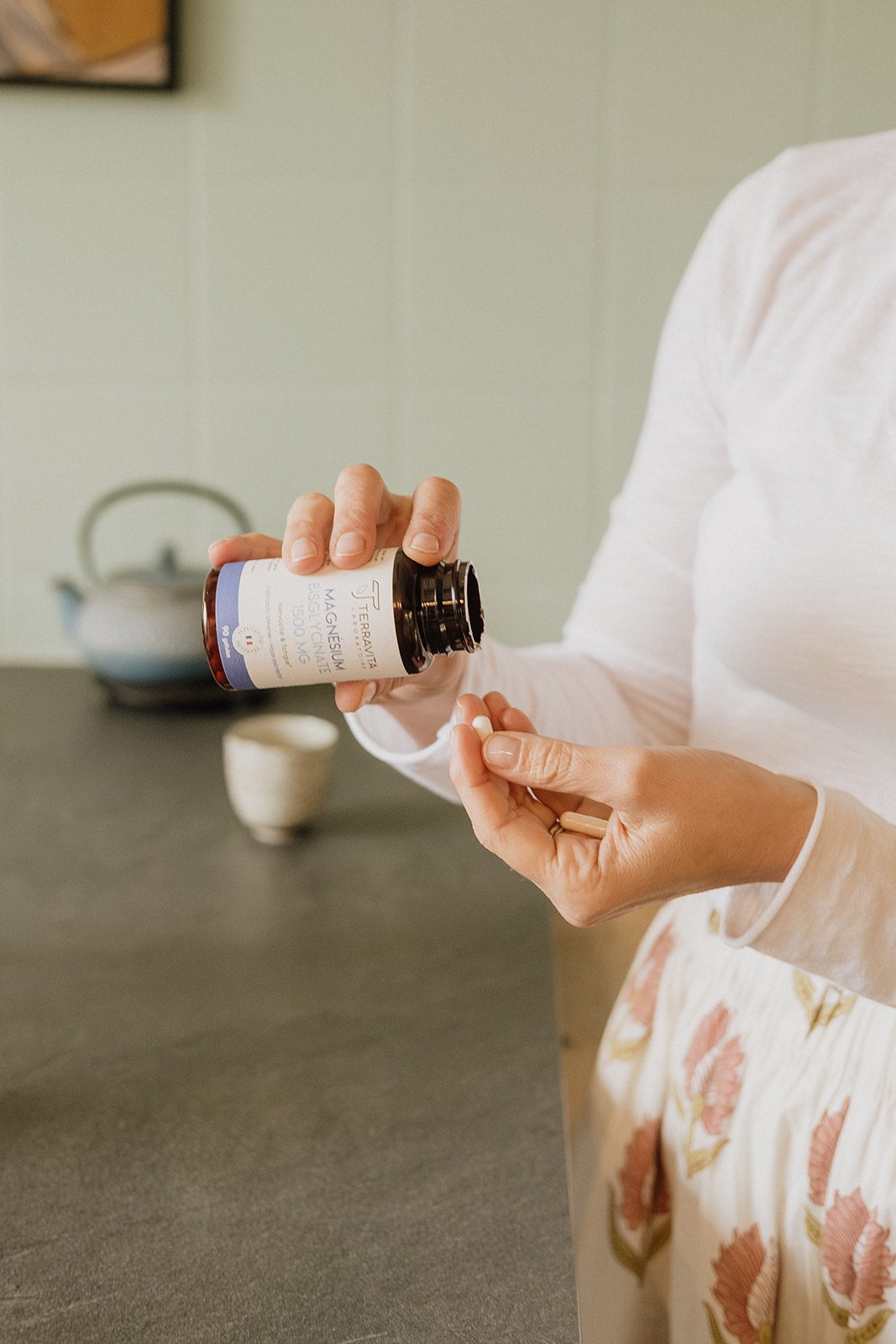
Magnesium is one of my evening essentials. I take it at night because it helps muscles relax and supports the nervous system when it’s time to wind down. In the morning, it just doesn’t have the same effect.
Beyond sleep, magnesium also supports energy production, hormone balance, and overall wellbeing. It’s one of those minerals that so many people are deficient in without even realising it. Alongside magnesium, I also take other carefully chosen supplements to support my overall health and vitality. You can find more about my full supplement routine on my supplements page.
8. Mouth taping & a silk pillowcase
To get even better sleep, I tape my mouth before bed. It encourages nose breathing through the night, which has made a big difference for me. I wake up feeling more rested, clearer, and with much deeper sleep.
I also sleep on a pure mulberry silk pillowcase. It’s gentle on the skin and hair, helps reduce friction, and feels lovely on the face. Small details, but they really add up.
Sleep and Kids
Helping children sleep well is one of the best gifts you can give them (and to yourself!) Kids thrive on rhythm and predictability. In our home, bedtime follows the same steps every night: bath, story, bed. This consistency makes them feel safe and helps their bodies know what to expect.
Screens and sugar in the evening are the worst culprits for poor sleep. Taking those out makes everything smoother. You can even make bedtime fun. I sometimes tell my kids that sleep is when they grow stronger like superheroes, and they love it.
If they’re old enough, you could watch something together about why sleep matters. Even short, child-friendly videos like this one can help them understand that sleep isn’t a punishment, it’s fuel.
Sleep and Teens
Teenagers are trickier. Their body clocks naturally shift later, which is why they struggle to fall asleep early and hate waking up in the morning. Fighting this only leads to conflict.
What helps is creating an environment that supports them:
Dim lights in the evening.
Encourage quiet downtime.
Remind them to put phones away. This is where the Ocushield blue light filter can help if they’re glued to their devices.
Sometimes, it helps to watch or listen together. Headspace Guide to Sleep on Netflix is a great place to start. It’s short, visual, and engaging. Matthew Walker also has excellent podcast interviews, such as on The Diary of a CEO and Huberman Lab. Hearing the science explained in a simple, relatable way makes teens realise sleep isn’t just a boring rule. It’s what powers their brain, their mood, and even their sports performance.
Why All This Matters
It’s tempting to think of sleep as a luxury or something to catch up on later. But the truth is, you can never catch up. Research shows that even after several nights of recovery sleep, your brain and body don’t fully undo the damage of long-term sleep loss. Poor sleep today means less focus, more mood swings, weaker immunity, and over time, faster ageing.
Good sleep, on the other hand, strengthens everything. It sharpens memory, balances hormones, supports immunity, and even helps your skin look more plump and hydrated. It’s like invisible skincare, the best mental health tool, and the foundation of wellbeing.
Start small. Move the phone out of the bedroom, dim the lights earlier, or wash your sheets this week. Each step is simple, but the results build up quickly and soon, better sleep feels natural.
Sleep well x Sakina
Choosing a selection results in a full page refresh.
 &
&